Arabic Seamless Patterns Set from Simple
If you're designing for authenticity, elegance, or cultural resonance—especially within Islamic art, Middle Eastern branding, or global textile work—the Arabic Seamless Patterns Set from Simple is more than a design asset. It’s a practical toolkit rooted in centuries-old visual language, distilled into clean, ready-to-use digital files.
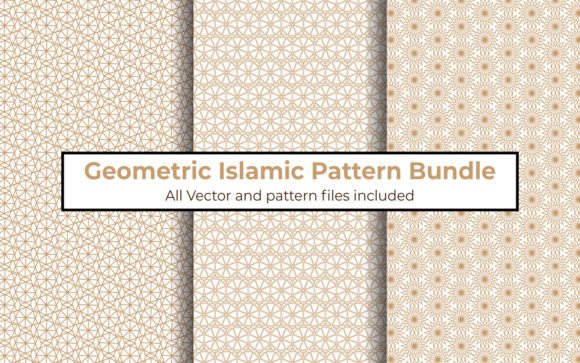
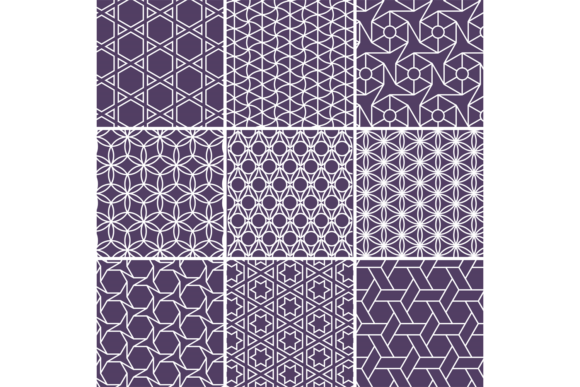
This collection isn’t about ornate overload. Instead, it focuses on clarity: geometric precision, balanced repetition, and intentional negative space—all hallmarks of classical Arabic ornamentation. Each pattern is built from foundational shapes—squares, stars, interlocking octagons, and rhythmic lines—then carefully engineered to tile flawlessly across any surface, digital or physical.
What Makes These Patterns Stand Out
Unlike generic “Islamic” clipart or over-processed vector bundles, this set prioritizes functionality without compromise. Every pattern is delivered in both EPS (editable vector) and high-resolution JPG formats—so whether you’re adjusting colors in Illustrator or placing a background in Canva, you retain full control and quality.
The geometry is mathematically sound—not approximated. That means no visible seams, no pixelation at scale, and no distortion when stretched across banners, packaging, or fabric repeats. You’ll also notice subtle vintage tonal shifts in some variants: soft sepia overlays, muted ochres, or ink-wash textures that nod to historical manuscripts and hand-blocked textiles—without sacrificing modern usability.
Where These Patterns Deliver Real Value
Designers aren’t the only ones who benefit. Here’s where the Arabic Seamless Patterns Set from Simple fits naturally—and effectively—into everyday workflows:
- Branding & Marketing: A boutique skincare line launching in Dubai uses one of the star-and-diamond patterns as a subtle watermark behind product photography—adding regional identity without competing with the visuals. No extra illustration time. No licensing headaches.
- Educational Materials: A university lecturer on Islamic art history embeds scalable vector patterns into lecture slides and student handouts. Because they’re seamless and vector-based, zooming into tessellation logic during class remains crisp and instructive.
- Textile & Surface Design: A freelance surface designer imports the EPS files directly into Procreate or Affinity Designer, recolors a four-fold rosette pattern in indigo and sand, then exports it for a limited-run scarf print—no repeat-mapping software needed.
- Digital Products: A Notion template creator layers a low-opacity geometric repeat behind weekly planner pages. The result? A culturally grounded aesthetic that feels intentional—not decorative clutter.
- Publishing & Print: An independent publisher uses a simplified arabesque border (included in the set) to frame chapter openings in a bilingual poetry anthology—enhancing thematic cohesion while keeping production costs low.
Why Simplicity Is Strategic—Not Limiting
“Simple” in the name doesn’t mean basic. It signals intentionality: these aren’t maximalist compositions meant for center-stage murals. They’re designed to support—not dominate. That makes them unusually versatile. A single pattern can serve as:
- A background texture in a presentation deck,
- A repeating motif on business cards or letterhead,
- A subtle UI element in a wellness app’s loading screen,
- A base layer for embroidery digitizing,
- Or even a teaching aid for symmetry and rotational geometry in middle-school math.
This adaptability saves time. You’re not hunting through dozens of variations to find one that works at 30% opacity or scales cleanly to 4K. You open the folder, pick a file, and go—knowing the underlying construction supports your use case.
Practical Considerations Before You Use Them
Even excellent assets need thoughtful application. Here’s what seasoned users watch for:
- Color context matters. Some patterns include vintage tonal layers baked into the JPGs. If you need full color independence, start with the EPS files and recolor there. Don’t try to “remove” sepia from a JPG—it rarely yields clean results.
- Scale affects perception. A dense 8-point star repeat reads as texture at 15% size but becomes a bold graphic element at 120%. Test at actual output dimensions—not just preview thumbnails.
- Check contrast for accessibility. When using patterns as backgrounds behind text (e.g., website headers), ensure sufficient luminance contrast between foreground type and the lightest/darkest parts of the repeat. A quick check in Stark or axe DevTools takes seconds and prevents readability issues.
- Licensing is straightforward—but verify. This set typically includes extended commercial rights (including merch and SaaS), but always confirm the license terms match your specific use—especially if distributing templates or white-labeled products.
How It Fits Into Broader Creative Practice
In an era where AI-generated “Arabic-style” patterns flood stock libraries—often misrepresenting proportions, violating sacred geometry rules, or flattening cultural nuance—the Arabic Seamless Patterns Set from Simple offers something quieter but more valuable: accuracy, respect, and utility. It assumes you understand *why* certain angles recur, why symmetry carries meaning, and why restraint often communicates more than complexity.
That doesn’t mean it’s academic or inaccessible. On the contrary—it lowers the barrier to using authentic motifs well. You don’t need a degree in Islamic art history to apply a hexagonal grid pattern thoughtfully. But because the set is built on those principles, your final output carries implicit integrity.
For freelancers quoting tight deadlines, educators preparing inclusive materials, or small studios building distinctive brand identities—this isn’t just another download. It’s a reliable starting point that honors tradition while serving modern needs. And in creative work, reliability is rare. And invaluable.