Hearts Patterns: Hand-Drawn Style for Real-World Creative Work
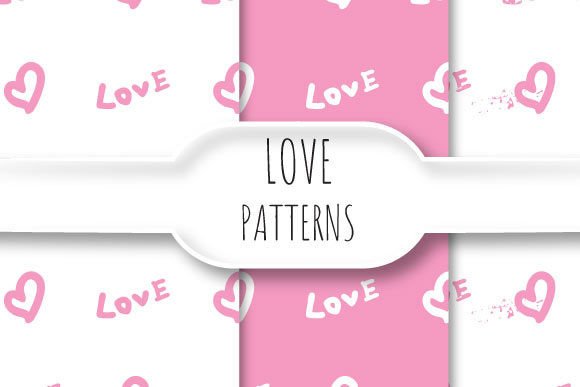
Hearts Patterns—specifically the hand-drawn style collection described here—are not decorative flourishes. They’re precision-crafted, production-ready assets designed to integrate cleanly into professional workflows where authenticity, scalability, and consistency matter. Each pattern is delivered at 12 x 12 inches (3600 x 3600 pixels, 300 dpi), in both EPS 10 and high-res JPEG formats. The ZIP contains three distinct EPS files and their matching JPEG counterparts—no duplicates, no filler, just intentional variety built for reuse.
Where Hearts Patterns Fit in Your Process
These patterns rarely exist in isolation. They enter your work at specific inflection points: when visual tone needs grounding in warmth without cliché; when a brand refresh demands texture that feels human but holds up in print; or when a presentation, product label, or educational handout needs subtle emotional resonance without overwhelming content. Unlike generic clipart or algorithmically generated repeats, hand-drawn Hearts Patterns carry organic line weight, slight asymmetry, and tactile rhythm—qualities that signal care and intentionality to viewers.
They function best when treated as system components, not one-off embellishments. That means selecting a pattern based on how it behaves across contexts—not just how it looks on screen. For example, one of the three EPS files may use looser, sketchier strokes ideal for editorial illustrations or workshop materials; another might feature tighter, interlocking hearts suited for packaging backgrounds or digital dashboard accents; the third could balance density and negative space for social media templates or slide headers.
Preparation: Compatibility and Setup
Before importing, verify your software supports EPS 10 natively—or confirm you’ll open it in Adobe Illustrator, Affinity Designer, or CorelDRAW with full vector fidelity. EPS remains the safest cross-platform vector format for print production, especially when collaborating with printers, publishers, or external designers who may use older or differently configured systems. JPEGs serve as immediate-use backups: for quick mockups in Figma or PowerPoint, client previews, or CMS uploads where vector support isn’t guaranteed.
Because each file is exactly 3600 x 3600 pixels at 300 dpi, scaling is predictable. Enlarge up to 200% for large-format prints (e.g., banners or wall graphics) without pixelation. Reduce to 25% for subtle watermarking or background textures in digital reports—no resampling needed. No extra resizing, no guesswork. This consistency saves time during layout phases and reduces revision cycles.
Workflow Integration Examples
- Branding & Marketing: Apply one Hearts Pattern as a repeatable background layer behind email newsletter headers or landing page sections. Its hand-drawn quality softens sharp digital interfaces while reinforcing approachability—especially effective for wellness, education, or community-focused brands.
- Educational Materials: Use the JPEG versions in Canva or Google Slides to create consistent section dividers across multi-week course decks. Because all three patterns share the same dimensions and resolution, swapping them maintains alignment and spacing—no reformatting required between modules.
- Product Development: Embed an EPS file directly into a packaging dieline in Illustrator. The vector paths scale cleanly to any panel size, and the open shapes allow easy recoloring to match seasonal palettes or accessibility contrast requirements.
- Content Planning: Assign each pattern to a phase of a project timeline—e.g., heart #1 for planning, #2 for execution, #3 for reflection—then use them as visual anchors in Notion or Airtable views. Their distinct yet cohesive styles reinforce process logic without needing explanatory labels.
Usability and Long-Term Use
Hearts Patterns are built for repetition without fatigue. The hand-drawn aesthetic avoids robotic uniformity, but the underlying grid and spacing are precise enough to tile seamlessly—no visible seams or misalignments when repeated across large surfaces. That balance is critical: too rigid, and the warmth disappears; too loose, and it fails in production.
Organization matters. Keep the ZIP archived with clear naming—e.g., “hearts-handdrawn-loose.eps”, “hearts-handdrawn-interlock.eps”, “hearts-handdrawn-balanced.eps”—so you can locate the right variant in under five seconds. Store JPEGs separately from EPS files in your asset library, and tag both with metadata like “texture”, “background”, “300dpi”, and “hand-drawn” for future searchability. This small step prevents duplication, version confusion, and last-minute scrambling before deadlines.
Quality Control in Practice
Before final output, test each pattern in context—not just isolated. Place it over your intended background color or image, zoom to 100%, and check for unintended visual noise: stray anchor points, inconsistent stroke ends, or clipping issues at tile edges. All three EPS files were constructed with clean paths and minimal nodes, but real-world usage (e.g., applying gradients or transparency effects) can expose edge cases. A 60-second test saves hours of press checks or client revisions later.
Also verify color mode: these files are RGB by default for digital flexibility, but if using in CMYK print workflows, convert *after* placing—not before. That preserves editing latitude and avoids unintended shifts in perceived warmth or contrast. The hand-drawn nature means subtle tonal variations respond differently to color space conversion; doing it post-placement gives you control over how those shifts land.
Efficiency Gains You’ll Notice Immediately
There’s no learning curve. No plugin to install. No license key to manage. You unzip, open, place—and go. That immediacy compounds across projects: the time saved not sourcing, resizing, adjusting, or redrawing hearts adds up to tangible hours per quarter. For freelancers billing by the hour, that’s direct margin protection. For educators building weekly resources, it’s mental bandwidth redirected toward pedagogy—not pixel-pushing.
More importantly, it eliminates decision fatigue around “what kind of heart feels right?” These aren’t arbitrary choices. Each of the three patterns was developed with distinct functional roles in mind—so your selection becomes a deliberate design decision, not a compromise born of deadline pressure.
Integration Beyond the Obvious
Hearts Patterns work well alongside other asset types—but only when aligned intentionally. Pair them with sans-serif typefaces to emphasize contrast between organic and structured. Avoid pairing with other hand-drawn elements unless they share the same line weight language; mismatched sketch styles create visual competition, not harmony.
They also interface cleanly with automation tools. In Adobe Illustrator, save each EPS as a graphic style or symbol for one-click application across documents. In Figma, import the JPEGs as local assets and apply them as fills within auto-layout frames—so resizing containers automatically adjusts tiling. These integrations turn static files into living parts of your toolkit.
Final Implementation Tip: Start Small, Scale with Confidence
Don’t try to use all three patterns at once. Pick one that matches your current priority—clarity, warmth, or balance—and deploy it in a low-stakes context first: a team meeting slide, a personal planner header, or a blog post divider. Observe how it performs. Does it draw attention where you want it? Does it feel consistent with your voice? Does it hold up when printed or viewed on mobile?
Once you’ve validated fit, expand its use deliberately—adding the second pattern only when you need a clear visual shift (e.g., moving from concept to implementation in a pitch deck). Let the patterns earn their place in your system, not fill space by default.
Hearts Patterns are not about adding hearts. They’re about embedding intention—into layouts, timelines, communications, and products—where warmth and humanity support, rather than distract from, purpose.